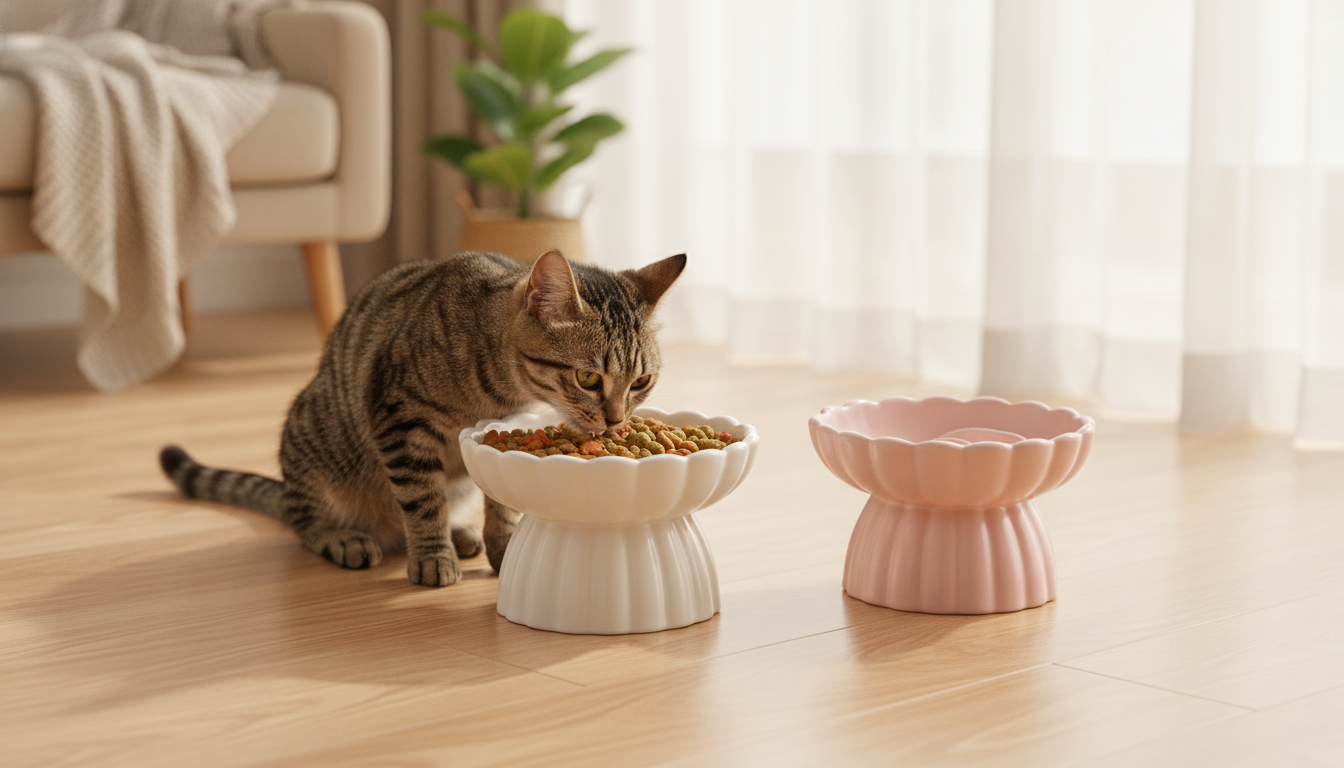
Mealtime should feel easy on your pet’s body and simple for you to manage. An elevated ceramic bowl with a slow-feeding surface helps bring food and water closer to a natural eating height while encouraging steadier bites. That combination can be especially helpful for pets that gulp, spit up, or seem uncomfortable bending down to floor-level bowls. For more guidance, see Best Dog Bowls of 2026 – June 2026 Reviews & Comparison.
If your pet finishes meals in seconds, pushes bowls across the kitchen, or looks stiff when lowering their head, a raised, heavier bowl with built-in slow-eating ridges can turn feeding into a calmer routine—without adding complicated steps to your day. For further reading, see What Bowl Is Best for a Pomeranian? Size, Safety & Expert ….
Elevation changes the feeding posture in a straightforward way: the bowl comes up to meet your pet, instead of forcing your pet down to the bowl. For many cats and dogs, that can make meals look smoother and feel less physically demanding.
For pets with frequent vomiting or suspected medical issues, it’s wise to read up on common causes and warning signs. The AVMA provides a helpful overview of vomiting in dogs here: AVMA: Vomiting in Dogs.
Slow-feeding designs typically use ridges, spirals, or maze-like patterns to break a meal into smaller “pockets.” That forces fast eaters to pause and reposition between bites, which can improve pacing without you needing to stand over the bowl.
Ceramic bowls are popular for good reason: they’re sturdy, easy to keep fresh, and generally pleasant for pets that seem picky about taste or odors.
For safer everyday feeding habits—especially if you handle wet food—review the FDA’s guidance on storage and sanitation: FDA: Tips for Safe Handling of Pet Food.
Elevation is most helpful when it supports a neutral posture. Too low and nothing changes; too high and your pet may crane upward or shift awkwardly to swallow.
| Pet type | What to look for | Common adjustment |
|---|---|---|
| Small cats & toy dogs | Neck stays level; shoulders relaxed | Choose a lower elevation and a smaller bowl diameter |
| Medium dogs | Comfortable stance; bowl doesn’t slide | Look for a wider base and moderate elevation |
| Senior pets | Less hunching; easier swallowing | Prioritize stable elevation and easy-to-clean surfaces |
| Flat-faced breeds | Able to reach food without pressing face | Pick gentle slow-feeding ridges and a shallower bowl profile |
If you want posture support and slower pacing in one daily-use piece, the Elevated Ceramic Pet Bowl with Slow Eating Design & Neck Protection combines elevation with a slow-feeding surface to encourage steadier bites. Ceramic construction adds weight for stability and a glazed finish that’s easy to keep fresh with regular washing.
Helpful add-ons for a more complete care routine include digital and printable guides like Paw-sitive Predictions: Using AI to Safeguard Your Pet’s Health and Sparkling Ears: The Ultimate Dog Ear Cleaning Checklist.
Slow-feeding bowls are generally suitable for daily meals when your pet can access food without getting overly frustrated. Start with smaller portions, supervise early use, and keep the ridges clean so buildup doesn’t become a hygiene issue.
Look for a neutral neck position and relaxed shoulders while eating. Your pet shouldn’t need to crouch low or stretch upward, and they should appear comfortable and steady throughout the meal.
Yes, wet food can be used, but it should be cleaned promptly because soft food can cling to grooves. A gentle scrub with a soft brush helps remove residue and keeps the bowl sanitary.









Leave a comment